1/9/2025
Barbara Riffe is a helper. Ask anyone connected to the USF men's and women's basketball programs. Riffe's desk sits on the top floor of the Pam and Les Muma Basketball Center, a high-traffic spot where a cavalcade of coaches and players make their constant pilgrimage. Maybe it's paperwork that needs approval. Maybe it's to double-check an appointment. Maybe they just need a kind word or some advice.
Riffe (rhymes with life) always delivers.
Officially, she's known as the "administrative specialist'' for both programs. She's more like an efficiency expert who deftly juggles a few dozen personalities, keeping the priorities straight while ensuring that the programs operate properly. In short, she provides answers before the questions even get asked.
Where would USF basketball be without "Miss Barb?''
"Miss Barb means the world to me,'' men's interim head coach Ben Fletcher said. "My first day on the job, she put her arms around me and made sure I had everything I needed. You can count on Miss Barb.''
"I think we're very lucky to have her,'' women's head coach Jose Fernandez said. "The amount of stuff that she does for both programs is amazing. She does a two-person job.''
But Riffe has a job much bigger than USF basketball.
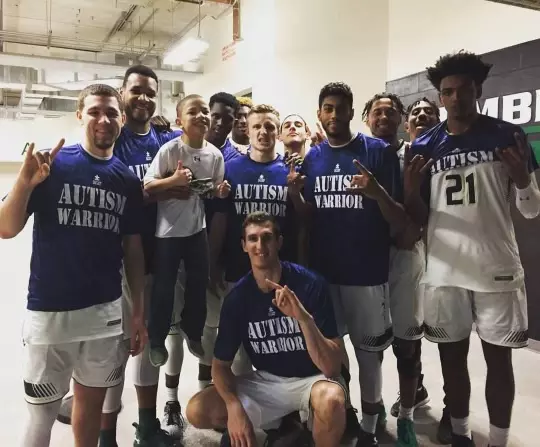
As both programs prepare for their annual Autism Acceptance Games — a cause spotlighted during the contests against the UAB Blazers on Tuesday (women) and Wednesday (men) — it's more than a good-hearted theme to be quickly acknowledged, applauded, and then forgotten.
For Riffe, it's a real-life reminder of how her family dynamics were forever changed. It's also a chance, she hopes, for everyone to learn patience, grace, and understanding instead of simply rushing to judgment.
"Some people search their whole lives and wonder what their purpose really is,'' Riffe said. "I know my purpose. I know why I'm here. I was put here to help.''
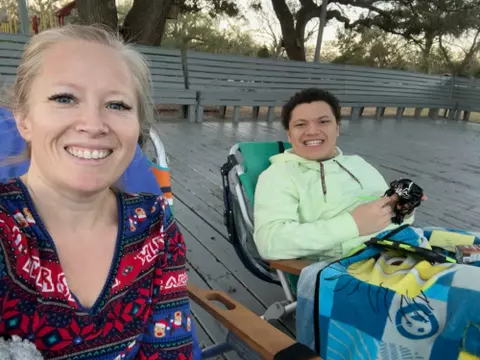
As small children, both of Riffe's grandsons were diagnosed with autism, a developmental disorder that occurs for one in 36 American children annually, according to the Centers for Disease Control and Prevention. Now the boys are high-school teenagers, the sons of Riffe's daughter, Amy Finley, a single mother. Riffe lives with them in Temple Terrace, a few miles from USF's campus.
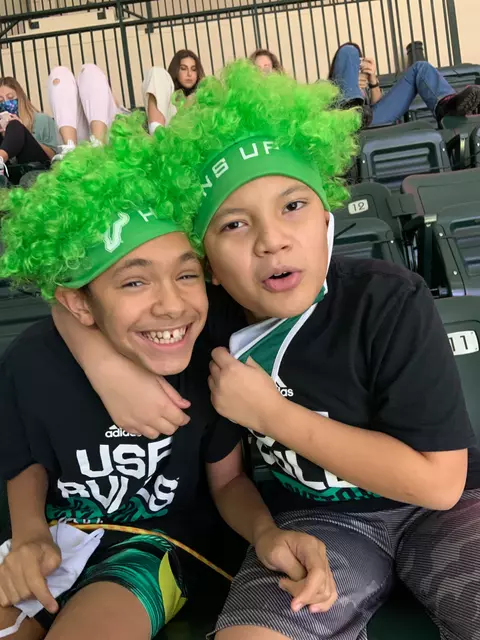
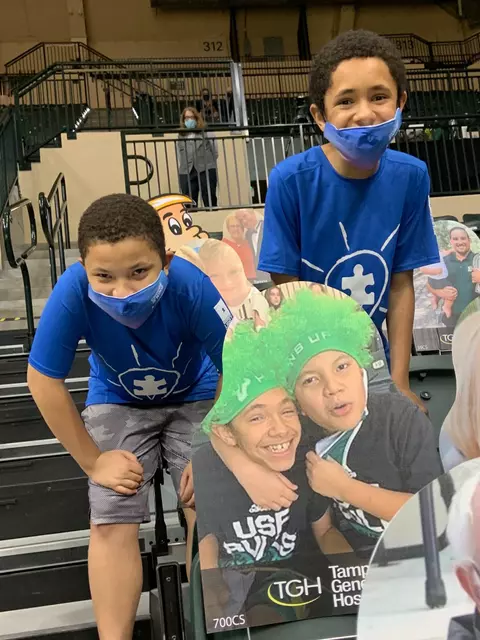
The autism spectrum is often misunderstood, but it has become much more common to be directly affected (autism occurred in one in 44 in 2001 and one in 110 in 2006, the CDC said). Symptoms can include communication difficulties, lack of social interaction, obsessive interests, and repetitive behaviors. Finley immediately swung into action by researching autism and finding the best programs for her sons.
"I'm incredibly thankful that I have my mother (Riffe) right by my side,'' Finley said. "I don't think I could do this without her. Everyone has bad days, right? But when I'm beating myself up, she's the one talking me down off the ledge. When I don't have the patience, she does. And she does it all with such love.
"I marvel at her, and I know she provides a calming and security for some situations that are incredibly challenging. Whatever happens, I know we're going to get through it. I have a mother — and the boys have a grandmother — who is always going to be there for us.''

Different Temperaments, Outlooks
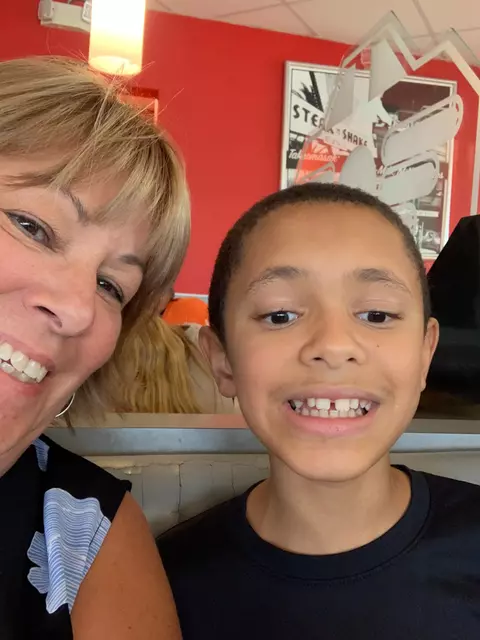
The boys' temperaments—and potential paths—are drastically different even though they are only 11 months apart.
Hayden is 17 and a student at Florida Autism Center of Excellence (FACE), a public non-tuition charter school. Sometimes, his disposition is disarmingly sweet. Just the other day, one of his classmates was distressed because another student hit him in the arm. Hayden blew him a kiss. Weekends can be problematic because Hayden likes the routine of going to school.
"Hayden is blessed to have such a special mom, one of the strongest moms in our whole school, maybe one of the strongest moms I've ever met in my life,'' said Sydney Jackson, the FACE principal who received her master's degree in autism from USF. "She has an unbelievable skill to know exactly who her child is and accept who he is, but also, she has a high expectation for what he needs to do and what he can achieve.
"Hayden's mother and grandmother are very loving, very caring, and very involved. They allow Hayden to grow into the moments where he can step forward and thrive. To see their resiliency and their ability to see progress and celebrate every step of that, it's really remarkable.''
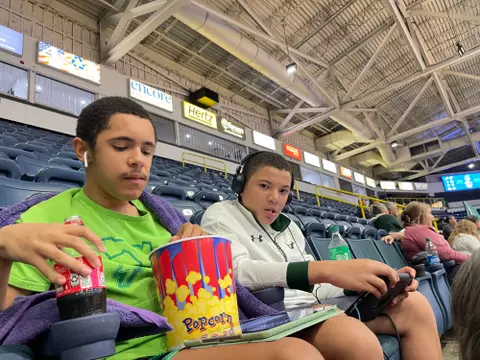
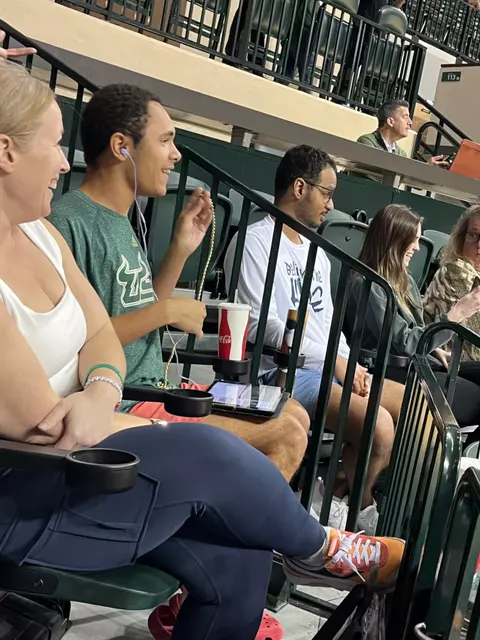
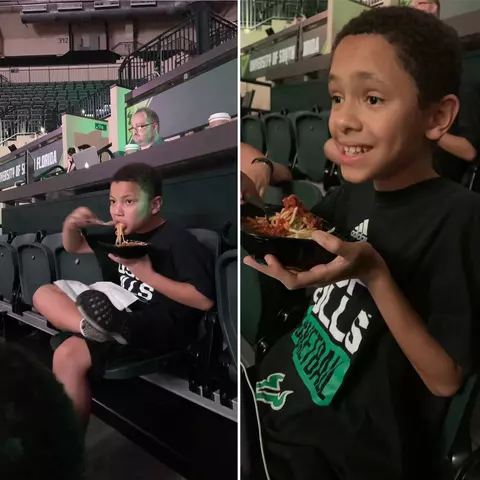
Hayden is generally non-verbal. He'll tell you the food he wants, but there's no back-and-forth conversation. He's a young man in motion, sometimes pacing back and forth in his front yard, sometimes skipping along, happy as can be, making a drone-like noise, fiddling with his ever-present string of beads. He once had a green trampoline and he bounced on it at all hours, nonstop, again with his noise as the backdrop. Sitting still? Good luck with that. Not surprisingly, he has almost zero body fat.
Riffe has always been "his person,'' practically from birth. He constantly wants to know her whereabouts. Whenever Riffe accompanies a USF basketball team on a road trip, a timer must be set so Hayden knows the exact time of his grandmother's return. He might call her "Grandma.'' More often, he addresses Riffe as "Barbara Riffe.''
You can spot Hayden at many USF basketball games. He's usually not there for the hoops, though. He returns for the allure of popcorn and soda.
"Hayden can be loud … and actually, with all my kids, my classroom can sound like a bunch of car alarms going off at the same time,'' said Chris Leader, a teacher at FACE. "But he's very smart, very aware of himself and his surroundings, very routine-based. Hayen is a really great kid, but there are times when you require some patience.''
On the challenging days, when meltdowns can arrive from nowhere, Hayden needs soothing, calming, gentle reassurance or sometimes Riffe's ability to just ride it out until his stormy mood has passed. It's unlikely that he'll ever lead an independent life, and he has no desire to do so. Hayden is happiest when everyone in the family is home, and nothing is left to chance.
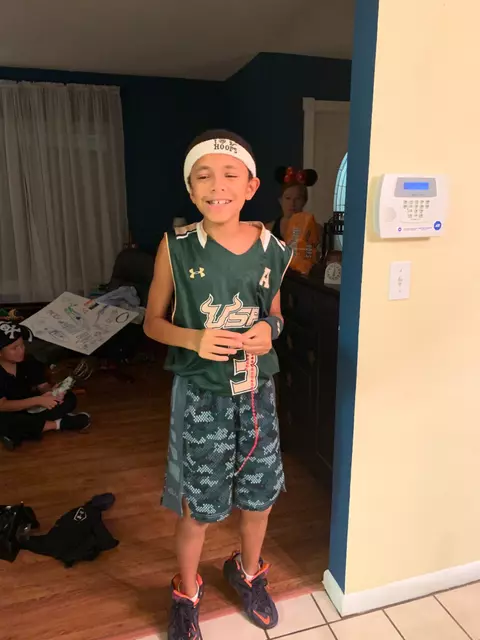
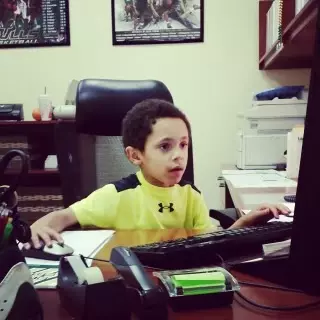
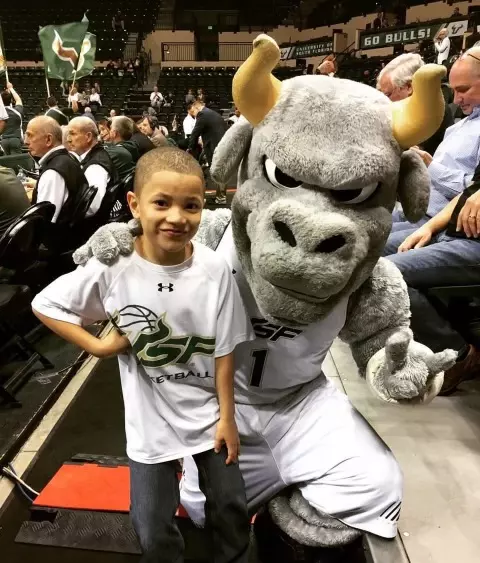
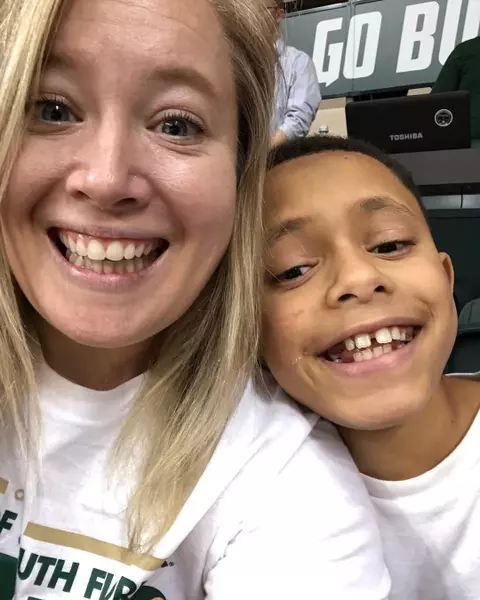
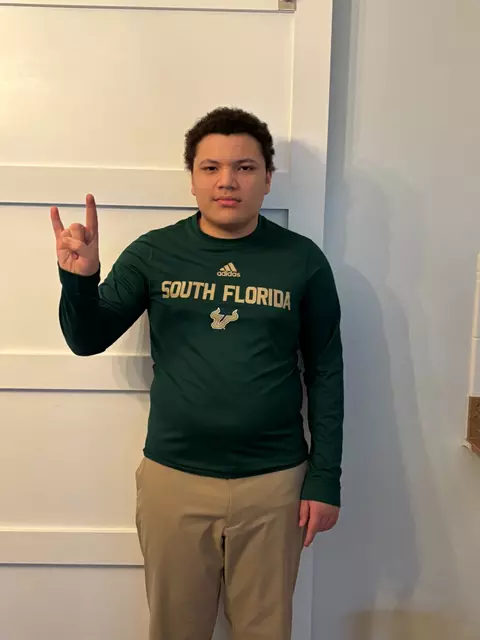
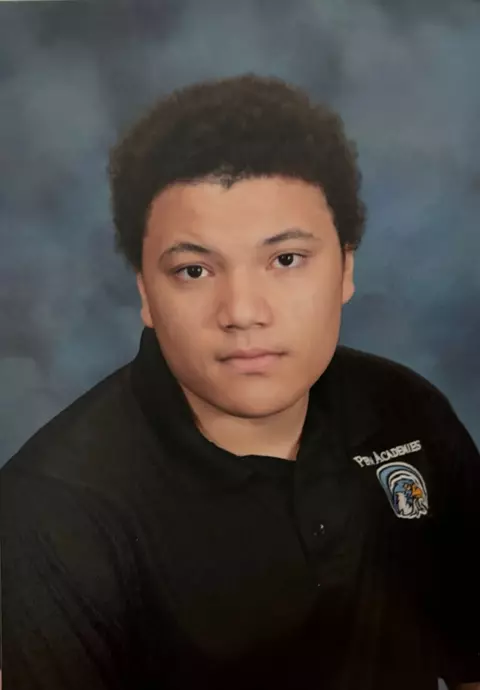
Mason is higher-functioning and 16, a student at Pepin Academy, a school known for its autism-related resources. He spent some time at King High School in the Hillsborough County School District, but there just wasn't enough expertise or manpower. One teacher said she passed Mason through so he wouldn't get upset. What good did that do?
Riffe said Pepin Academy has been great for Mason, who sometimes shows signs of coming out of his shell. Ordinarily, Mason shuns socialization. He stays in his room a lot. His mother or grandma usually reminds him to eat. He rarely makes a fuss. He has no interest in USF basketball and hasn't been to a game in years. The isolation seemed concerning, but now it's just normal.
There's hope for Mason to live an independent life, maybe to attend college. Riffe wonders sometimes about Mason's distant, quiet world, but it's filled with creativity and artistry.
Mason loves being on his iPad, cutting up scenes and assembling them into his own movie. It can keep him occupied for hours. Sometimes, he gets loud, talking to himself about the movie he's watching. He also has a rainbow inventory of colored painter's tape (a preferred Christmas gift), which he utilizes to construct and create little lifelike characters. He has drawers full of them, all striking and intricately detailed.
Sometimes, Riffe will ask Mason if he had a good day at school. He'll give a thumbs-up. That's about the extent of it.
"If you have kids 16 or 17 years old, there's a certain pace of life you have, and it probably looks nothing like our life,'' Finley said. "We have a different life. But it's a blessed life.''
Counting The Blessings
Finley didn't have that outlook at first. Hayden was 2 1/2 years old when she first noticed that things weren't right. He didn't make eye contact or have any conversations. He was toe-walking. After the diagnosis, Hayden's needs were so great that she didn't notice the possibility that Mason, too, was on the autism spectrum. Mason wasn't diagnosed until age 5.
"It's all very devastating at first because you know that your child or grandchild isn't going to have a traditional normal life,'' Riffe said. "It's like anyone who has hopes and dreams for their kids. In this situation, all of those expectations have to change.
"They're not going to play Little League baseball. They're not going to join the Boy Scouts. You must adjust to it because your mindset is having your kids doing the traditional things.''
Finley, who works at home in retirement plan record-keeping for a financial firm, sometimes finds herself daydreaming about the perceived idyllic lives of friends with teenage children. Those parents are gaining more freedom as their kids gain more independence, learn to drive, and fill their days with school-related activities. At this stage of her life, Finley has less freedom.
It seems discouraging, but Finley doesn't stay down for long. Wanting the best life for her children, Finley has educated herself in all aspects of autism. When confronted by puzzling stares or inappropriate questions in a public setting, or if her kids act up in a non-socialized manner, she's a tough-minded advocate.
"The parents of kids with autism or other disabilities … they know the deal,'' Finley said. That's her greatest wish for the effectiveness of this week's proceedings.
They used to be called Autism Awareness Games, but now they are Autism Acceptance Games. Acceptance is everything.
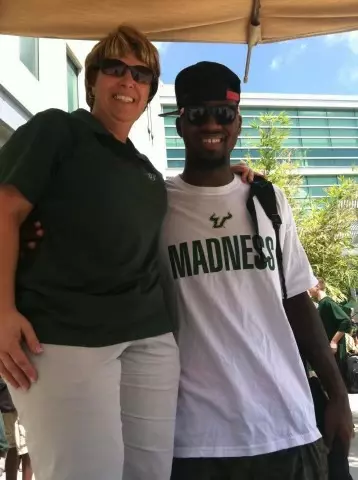
USF men's basketball has long been oriented toward autism, with fan-favorite Brandon Matthews serving as team manager. The school's acclaimed Center for Autism and Related Disabilities made it the place to be for Matthews and others in the Tampa Bay area autistic community.
"I think the first step is recognition, not seeing them (autistic children) as people who are beneath us or people who just don't understand at all what we go through,'' Leader said. "Because they go through exactly what we go through. They can't explain it as verbally as we can sometimes.''
The education is ongoing.
"If a child with autism has a meltdown in public, the parents are often viewed in a very non-understanding way,'' Riffe said. "People are looking at them like, 'What's wrong with you?' Or it's like, 'Why aren't you disciplining them?'
"So acceptance is a very good word. Don't judge. Get all the facts before you start assuming.''
Finley has learned not to put limitations on her boys. If possible, it's best to meet them where they are.
"Don't feel sorry for us,'' Finley said. "Autism affects a lot of people. Your socio-economic status doesn't matter. Your race or where you live doesn't matter, either. There are hard days, but there are great days. Life can be different, but it can also be good.''
"As a reminder, we tell our staff that the students aren't giving you a hard time … they're having a hard time,'' Jackson said. "It's our job to help them through it. A lot of our students have these behaviors because they can't communicate with the world. When we teach them how to communicate, they can suddenly describe the hard time they're going through, and we can give them the tools they need to work through it.''
There's a chart for Hayden to use so he can express his moods. It has different faces — happy, sad, mad, frustrated, confused. Sometimes, he'll verbalize it and say, "Happy Hayden!'' And everyone knows it has been a very good day.
"You know how some parents are worried sick about their teenage kids, wondering what they're into?'' Riffe said. "We don't have any of those worries. Cell phones? Mason doesn't want a cell phone. Who would he call? We have issues, but not the issues that a typical parent or grandparent of a teenage kid would have.
"It's not that you wish for a different life. You go through stages of mourning for the life that you wanted for them. Here's the way I look at it: I'm actually very blessed. There are some grandparents who never get to see their grandkids. I get to see mine every day.''
If you observe Riffe at the Muma Center, you'll notice her empathy and patience. She operates placidly in the often high-pressure world of college athletics. She loves the USF coaches and players.
"Miss Barb means a lot to our team,'' Fletcher said. "What she does for us on a daily basis, it doesn't go unnoticed.''
"Miss Barb really cares about both basketball programs, the entire athletic department, and this university,'' Fernandez said. "She cares — period. She's near and dear to my family. She gives great support to us. But more than that, she gives great support to her daughter and grandchildren. And she does all of it with a smile and a positive attitude. It's inspiring.''
When Riffe is out of the protective basketball bubble, she doesn't take her work home. She returns to the real world, back to her purpose and a vocation she couldn't possibly have imagined.
She takes each day in stride, knowing that life goes on, no matter what. When her grandsons are happy, she knows everything will be all right.
It's the sort of peace that usually comes with acceptance.
On April 2 — World Autism Awareness Day — the public is invited to a luncheon at the Florida Autism Center of Excellence (FACE), ADDRESS, to celebrate the work of the school in the Tampa Bay community and conduct a fundraising auction. For information, check the school's Web site at faceprogram.org.